Description
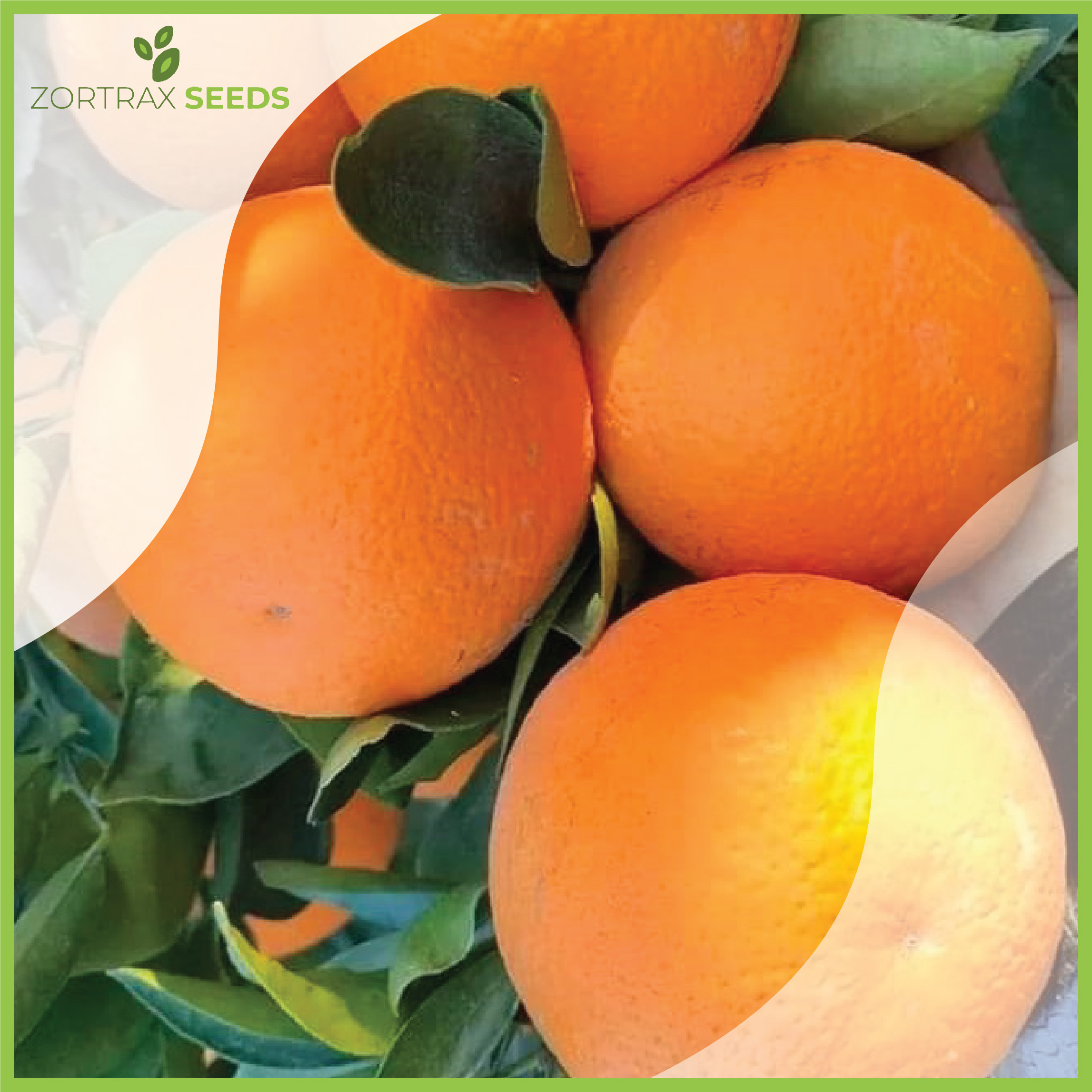
Orange, Citrus sinensis, is an evergreen tree in the family Rutaceae grown for its edible fruit. The orange tree is branched with a rounded crown and possesses elliptical or oval leaves which are alternately arranged on the branches. The leaves have narrowly winged petioles, a feature that distinguishes it from bitter orange, which has broadly winged petioles. The tree produces white flowers singly or clustered on a raceme. The fruit is a spherical berry with a green-yellow to orange skin covered in indented glands and a segmented pulpy flesh and several seeds. Orange trees can grow to a height of 6–15 m (16–49 ft) and can live for periods in excess of 100 years. Most plantations have an economic lifespan of around 30 years. Orange may also be referred to as sweet orange or navel orange and is believed to have originated from a wild ancestor in the border between Vietnam and China.
Orange is a subtropical plant and the trees grow best in regions with a pronounced change in season. They will grow best at temperatures between 12.8 and 37.8°C (55–100°F) during the growing season and 1.7 to 10°C (35–50°F) during dormancy. Mature orange trees can survive short periods of freezing, whereas young trees will be killed. Trees should be protected from frosts and freezing conditions to prevent damage. The trees will also tolerate drought conditions but perform poorly in water-logged soil. Trees will grow best when planted in a well-draining sandy loam with a pH between 6.0 and 7.5. Soil must be deep enough to permit adequate root development. Orange trees require full sun and should be protected from wind which can cause damage to the trees


