Description
Macadamia), genus of four species of evergreen trees belonging to the family Proteaceae known for their richly flavoured edible seeds. The trees originated in the coastal rainforests and scrubs of what is now Queensland in northeastern Australia and are grown commercially in a number of subtropical areas. Commonly known as macadamia nuts, the seeds are often roasted and salted or are used by bakers and chocolatiers in confections and chocolates. They are a good source of calcium, phosphorus, iron, and vitamin B, and they contain 73 percent fat.
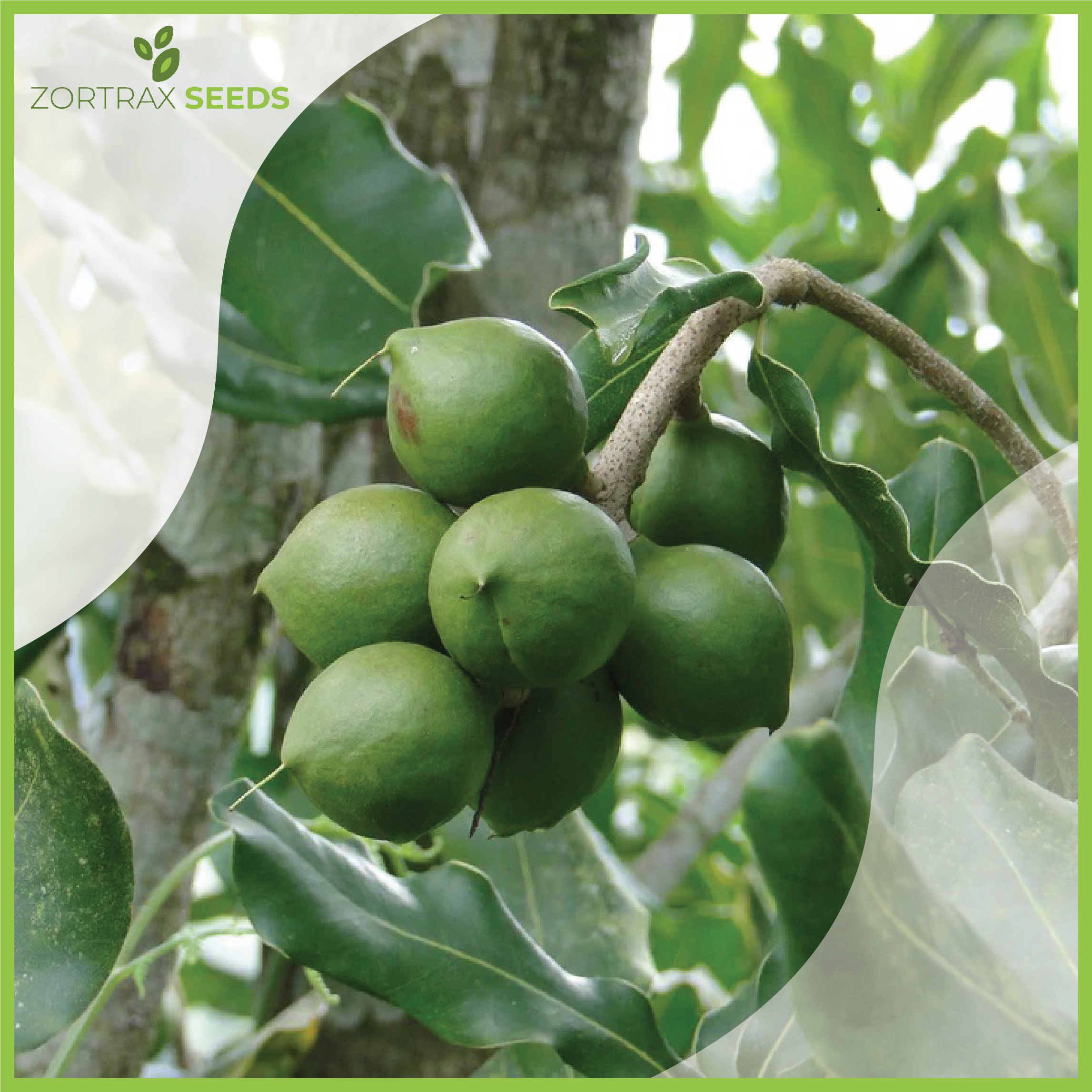
Macadamia trees commonly grow to 18 meters (60 feet) high and 15 meters (49 feet) wide. They have shiny leathery leaves that are 20–30 cm (8–12 inches) long. Fragrant pink or white flowers are borne in clusters and are succeeded by bunches of up to 20 fruits. Not a true nut, the shiny round 25-mm (1-inch) seed is enclosed in a thick leathery husk that splits along one side during the ripening process.
The macadamias grown commercially are principally of two species, the smooth-shelled Macadamia integrifolia and the rough-shelled M. tetraphylla; the two tend to hybridize beyond distinction. A third species, M. ternifolia, is sometimes cultivated, while the final member of the genus, the blubbering nut (M. jansenii), and is an endangered species. Because macadamias are difficult to propagate, slow to bear, and limited in range of cultivability, production has not kept pace with increased demand, thus rendering the product costly. Most commercial production takes place in their native Australia and in Hawaii.


